

What established means for a house and its wiring
The word established is a gentle way of saying that a neighborhood has had time to mature. Trees have grown in, landscaping has filled out, and the houses have been lived in long enough to show their personalities. In Bonaventure, that maturity sits alongside a country club and golf setting, which gives the community a spacious, open character. For electrical work, established has a specific meaning too. It means the original wiring and equipment have been in service for a long time, and many owners are now at the point of updating them.
That does not mean anything is wrong. Wiring that was installed correctly with the materials of its day can last a very long time. What changes is the expectation placed on it. A house designed for one era of electrical living is now asked to run modern kitchens, multiple air handlers, entertainment rooms, home offices and sometimes a pool or an outdoor kitchen. The wiring may be sound, but the panel, the circuit layout and the number of outlets may not match how the family lives.
A useful approach is to separate the question of safety from the question of suitability. Safety asks whether anything in the system is damaged, overloaded or installed in a way that could cause harm. Suitability asks whether the system fits your needs, today and over the next decade. The two questions have different answers and different urgency. A system can be perfectly safe and still be unsuitable for what you want to do, and a system can be quite suitable for a family that uses little power while hiding a hazard that needs correction.
The most valuable first step for an established home is a calm, thorough look by someone who explains as they go. The point is not to find as many faults as possible. The point is to understand the system, rank what you learn by importance, and decide in what order to address it. An honest electrician will separate must do items from nice to have items, and will tell you which items can wait for a remodel.
The sections below follow that thinking: how to read what is already in the house, the special features of a golf and club setting, how remodeling projects interact with wiring, what larger homes need, and how to keep good records so each future project begins with knowledge, not a guess.
How to read what is already in your house
Every house leaves clues about how it was wired and how it has changed. Learning to notice them helps you have a better conversation with any electrician and avoid surprises during a project.
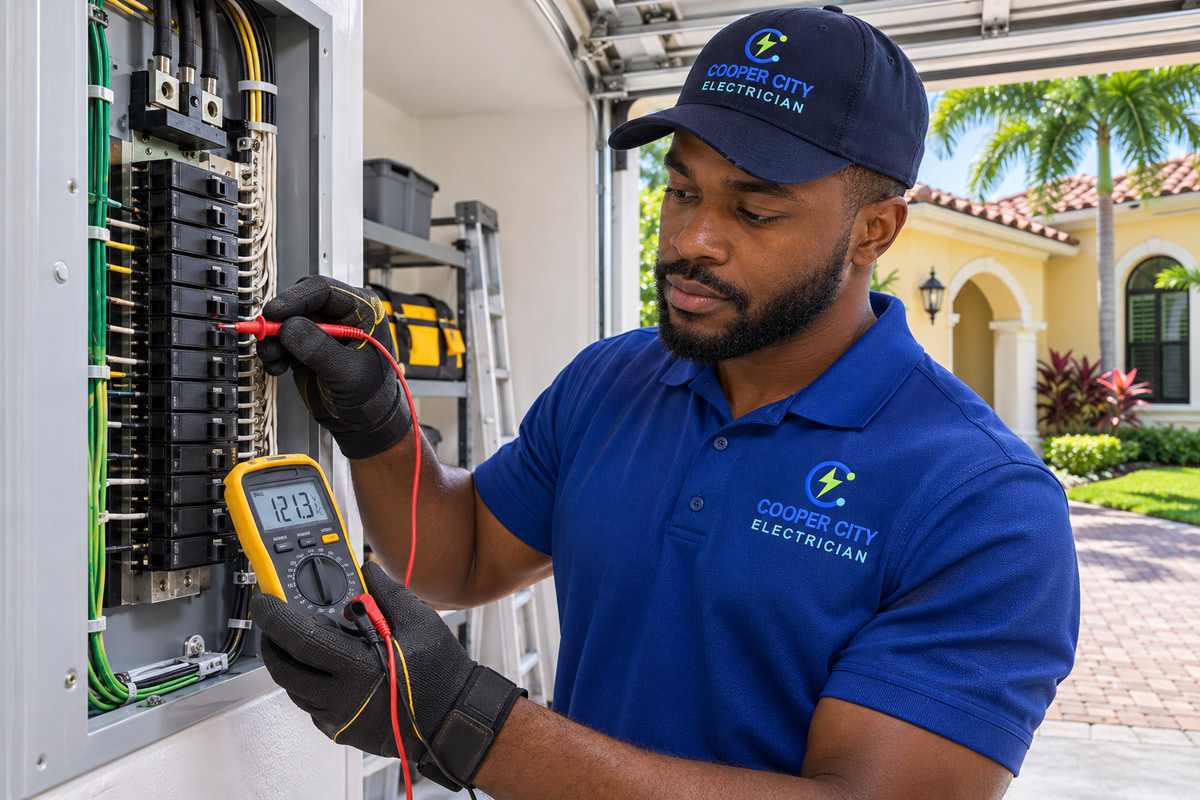
Begin at the panel. Notice its manufacturer label, how many breakers it holds and whether every space is used. Look at the wires entering the box. Are they tidy, bundled in neat groups, or crossed and tangled? Are there signs of past additions, such as breakers that do not match the others or wires that look newer than the rest? A panel that has seen a lot of change is not a problem in itself, but it tells you that the circuits inside may not follow a simple pattern.
Look at the outlets around the house. Do all of them have three openings? Are there places where a three prong outlet has been installed but there is no ground behind it? A tester can reveal that, and it is one of the more common findings in established homes. Look for ground fault protective outlets in kitchens, bathrooms, garages and outdoors. If a bathroom has one but the outdoor outlets do not, that is a gap worth closing.
Check the switches. Dimmers that buzz, switches that spark or feel hot, and switch plates that have discolored all point to something worth examining. In established houses it is also common to find that a single switch controls an outlet or fixture in a way that is not obvious. Learn what controls what, and mark it down.
Walk through the attic and the garage if you can do so safely. Wiring in unconditioned spaces sees more heat and sometimes more disturbance. Look for cables lying loose across insulation, junction boxes without covers, and extension cords doing work that fixed wiring should do. Insulation added over time sometimes buries boxes and cables, which can hold heat.
It is wise not to open the panel cover yourself or to test live wiring without training. What you can safely do is observe, list and ask. A notebook with a few photographs of the panel door, the outlets that concern you and any equipment labels will make your first call much more productive. Bring up anything you have noticed, even if it seems minor, since small clues often point to the real cause.
A country club and golf setting, and what it brings
Living near a golf course and a club is a pleasure, and it brings some practical electrical considerations. Open space beside a home means wide skies and fewer tall buildings to take the hit from lightning. Houses with open views are somewhat more exposed to storms, and the benefit of surge protection is higher than average. Large trees along fairways can also drop limbs onto service lines during wind, so after a storm it is worth looking at the line running to your house and the weatherhead where it arrives.
Many homes beside golf courses and lakes have lanais or patios designed to enjoy the view, and they often have ceiling fans, speakers, television wiring and lighting. In an established home, these outdoor spaces were frequently wired a long time ago. The fittings may have corroded, and some fixtures may not be rated for damp locations. An upgrade is usually inexpensive compared with the remodel it supports and reduces the chance of tripping or nuisance failures.
Landscape and path lighting is another common project. Low voltage lighting systems use a transformer and thin cable buried shallow in the ground, and they are usually easy to install and adjust. The transformer should be on a ground fault protected outlet, and the cable should be kept away from spots where gardeners dig. The goal is to light the paths and highlight trees without glaring into neighbors' windows or making the yard look like an airport.
Irrigation controllers and pumps are electrical devices too, and in a community with sizeable lawns they run frequently. A controller with a failing power supply or a pump with a faulty connection can cause strange symptoms such as zones that do not water. An electrician can check the power to the equipment, while a landscaping specialist handles the irrigation plumbing.
If you are near the clubhouse or other community amenities, it is also worth knowing that community rules may apply to what you can do on the exterior of your home. Check with your community association before adding visible equipment such as a generator, a large fixture or new conduit. A quick question beforehand costs nothing and avoids a redo.
Remodeling an established home without wiring regrets
Remodeling is the most common reason established homes receive electrical attention, and it is also the time when the best decisions can be made. Walls are open, ceilings are accessible and the cost of reaching wiring is already covered by the construction project. The mistake many owners make is to treat electrical as an afterthought to be sorted out after the cabinets and flooring are chosen. By then the options are narrower.
Bring an electrician into the conversation early. Before a kitchen is designed, the electrician can say where circuits can run, whether the panel can support new appliance circuits, and whether the location of the range or refrigerator changes anything. Before a bathroom is gutted, the electrician can plan outlets, lighting levels, a proper fan and ground fault protection. Before walls are closed, the electrician can add extra blocking for fixtures, run spare cables and conduits, and add low voltage wiring for networking and speakers.
Think about lighting in layers. A room works best with a soft general layer, a task layer where you work or read, and an accent layer where you want a mood. Many older homes rely on a single ceiling fixture, which makes rooms feel flat. Recessed lights, under cabinet lights and wall fixtures can transform a room, but each has its own wiring needs and switch planning. Dimmers rated for the type of light you choose make the difference between pleasant and harsh.
Plan outlets with how you will actually live. Put them where chargers, lamps and appliances will be, not just at standard intervals. In a kitchen, think about the island, the pantry and the corner where the coffee station will live. In a bedroom, consider outlets at the bedside for chargers. In a living room, think about the wall where the television will go and run low voltage and power together.
Finally, pay attention to the panel as part of the remodel. A big kitchen or an addition may push the existing service past comfortable. Upgrading while walls are open is much easier and less disruptive. And the permit and inspection stage, a regular part of remodel work, gives a chance for a second review before the walls are closed.
Larger homes have larger electrical needs
Some established homes in Bonaventure are on the larger side, and size alone changes the electrical picture. A larger home has more rooms to light, more wire to run and often more than one air conditioning system. Multiple air handlers mean multiple circuits, and the condensers outside draw a lot of power when they start. When two systems start together, for example when the power returns after an outage, the surge can be significant.
Panels in larger homes sometimes include a subpanel, a smaller distribution box fed from the main one, located in a garage, a wing or an upstairs area. Subpanels are useful but can be a source of confusion. Each one needs proper feed wiring, correct grounding and neutral separation, and clear labels. If you have one, find out where it is and what it supplies, and make sure the directory is up to date.
Voltage drop becomes a subject on longer runs. When a circuit travels a long distance from the panel to a far corner of a large house, a detached garage or a guest house, the voltage can sag along the way, and equipment may run less efficiently. The remedy is usually thicker wire. It is a topic to raise when planning any new circuit to a distant location.
Large homes also tend to have more fixtures that are hard to reach, such as high ceilings, chandeliers and exterior wall lights. Changing a bulb should not mean renting a scaffold. If you are planning new lighting, consider fixtures that can be lowered, or LED sources with long life, to reduce maintenance over time.
Finally, think about outage resilience. A larger home has more to lose when power fails. Some owners want a way to run key circuits from a generator, and a properly installed inlet and transfer arrangement makes that safe. A larger home also benefits from whole house surge protection and, in some cases, an uninterruptible supply for network equipment. The right answer depends on how you use the house, and the best way to find it is to describe your routine and ask what would matter most during an outage.
One more matter for bigger houses is the length of time a system has been expanding. A house that began with one electrical plan may have gained a bonus room, a second story addition or a converted garage. Each addition brought new circuits, but the original panel and service stayed the same. When enough additions stack up, the sum of what the house can draw at once surpasses what the service was sized for. This does not always show up as a tripped main breaker. Sometimes it shows up as lights that dim when the air conditioners start, or as breakers that trip on hot afternoons when every system is working hard. A load calculation, done with the actual equipment in the house, replaces guessing with arithmetic and gives you a clear answer about whether an upgrade is needed.
Keeping records so the next project is easier
One of the quiet gifts you can give your future self is a clear record of what has been done to your electrical system. Established homes often have no documentation at all. The previous owner may have known which breaker controlled the patio lights, but that knowledge left with them. A bit of recordkeeping now can save a lot of confusion later.
Start with the panel directory. Label every breaker clearly and consistently, using room names and what is served, such as kitchen counter outlets or garage freezer. If the existing directory is faded or wrong, a careful retest and relabel is a worthwhile hour of work for an electrician and sometimes part of a panel service visit.
Take photographs before walls are closed on any project. A few pictures of cable runs, boxes and junctions show where wires go, which is invaluable if someone wants to hang a heavy shelf or cut an opening years later. Store these photos with your home records, along with copies of permits and inspection results.
Keep a list of devices with their installation dates. Smoke alarms, ground fault outlets, surge protectors and the panel itself all have recommended service lives. A simple list lets you replace them on time. You can add the date to the back of an alarm with a marker, and note the date on your list or calendar.
Keep a record of what you learned from each visit. If an electrician found something that was fixed or something that should be watched, write it down. That kind of notes file becomes more valuable the longer you own the house, and it is a plus when you sell, since buyers appreciate documented care.
Bonaventure homes represent a long term investment, and electrical care is one of those jobs that rewards patient, steady attention. Call to talk through your plans, whether that is a small repair, a panel review or a full remodel. Describe the house, what you have found and what you would like. A quote is given after a conversation by phone, and a visit is needed whenever walls, panels or hidden wiring are involved.
A short worked example may help. Picture an owner in an established house who plans to redo the kitchen and extend the lanai. On the first visit the electrician looks at the panel and finds it neatly built but fully occupied. The kitchen plan adds a range, a wall oven, a dishwasher and an island with outlets, and the lanai plan adds a ceiling fan, lighting and a place for a future outdoor kitchen. Together these do not fit in the open spaces available. The electrician explains two routes: swap in a larger panel with more spaces, or add a subpanel near the lanai. They discuss the cost of each after the visit, and the owner chooses the larger panel because it also allows a whole house surge device and a future charger circuit. The permit is pulled, the old kitchen wiring is traced and corrected while the walls are open, and the inspector sees the work before drywall goes up. The owner ends with a labeled panel, new circuits and photos of every wall. That is what a well ordered remodel looks like from the electrical side.
Another common scenario involves a house bought recently. New owners often discover small oddities after moving in: a switch that controls nothing, an outlet that works only when another is on, or a light that dims when a certain appliance starts. These are not necessarily dangerous, but they deserve a systematic look. A good way to begin is to walk through the house with the electrician and point out each oddity. Many turn out to be leftover wiring from earlier changes, such as a switch for a fixture that was removed, or a split outlet where one half is controlled by a wall switch for a lamp. Solving them one at a time, with notes, gives the new owners a map of the house that the seller never provided.
Bonaventure within Weston
Bonaventure is a residential community in Weston, set around a country club and golf surroundings. Its character differs from the newer communities elsewhere in the city because its homes have had more years to be lived in, renovated and added to. That makes it a place where electrical conversations often begin with the words we are redoing the kitchen or we want to update before selling.
If you live here, it helps to mention whether your house sits beside the course, a lake or a quiet interior street, since open exposure can affect storm protection decisions. Mention also whether you have a pool, a guest area or a detached garage, so the first conversation fits the actual property.
Neighboring pages worth reading
Within Weston you may also want to read about Indian Trace, where homes are newer. In Pembroke Pines, the pages for Pembroke Pines and Pembroke Lakes cover nearby communities. Cooper City, a family oriented suburb, also has many established homes with pools. For upgrading the main equipment, see our page on electrical panel upgrades, and for basic concepts, read amps, volts and watts for homeowners.