
Starting from a sound foundation, and knowing its limits
A newer home has real advantages. The wiring was installed to current standards, which include protections that older houses often lack: ground fault protection in kitchens, bathrooms, garages and outdoors, arc fault protection in living areas and bedrooms, tamper resistant receptacles and interconnected smoke alarms. The panel is usually modern, with space for additional breakers, and the wire is copper throughout. These things mean there are fewer unpleasant surprises when an electrician opens a wall or a panel in Monterra than in a house from fifty years ago.
But newer does not mean unlimited. A panel has a finite capacity, and the number of open slots can be smaller than you expect. Builders size a service for the house as designed, not for the house the family will have in ten years. If you add a pool, a large heat pump, a second air conditioner, an electric vehicle charger and an outdoor kitchen, the total can approach the limit. It is worth understanding where your home stands before ordering equipment.
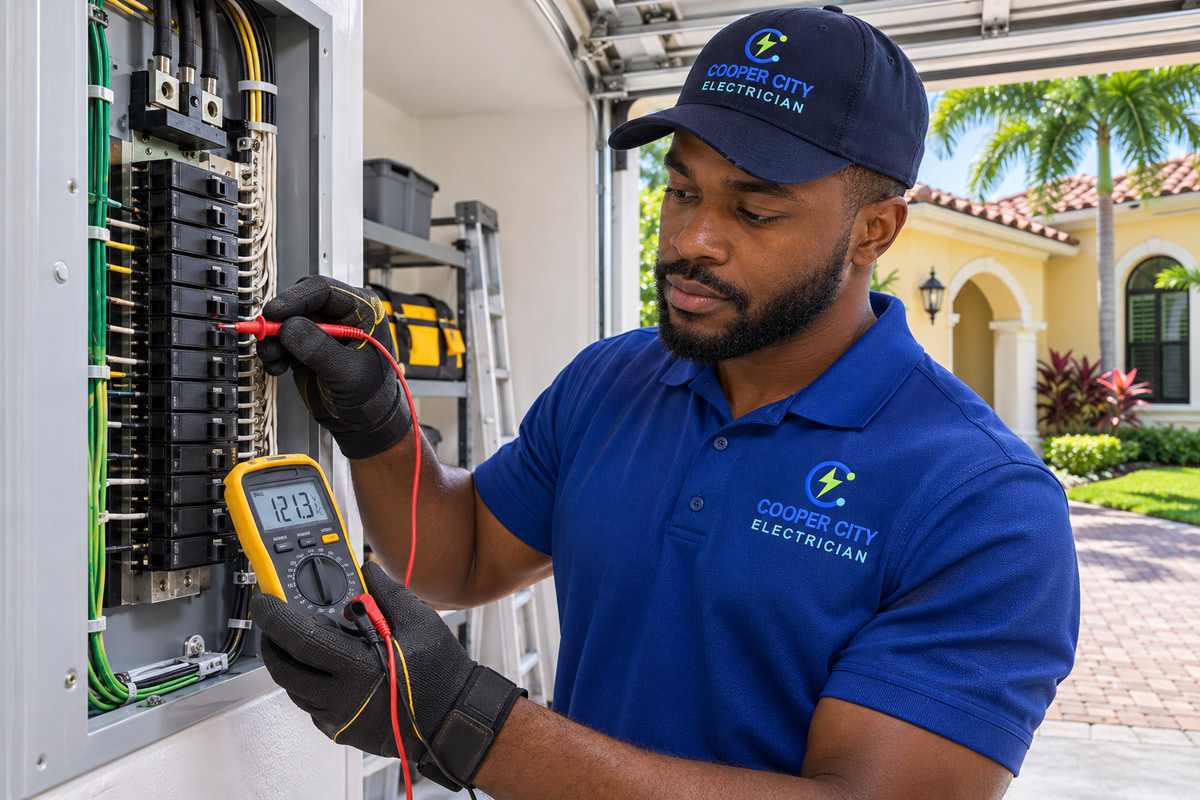
One of the easiest ways to learn is to look at the panel directory and the main breaker. The main breaker's rating tells you the overall limit of the service. The directory shows what each breaker feeds, if it was filled in carefully. In many new homes, the directory was completed in a hurry by a crew, and labels like bedroom or misc leave a lot unsaid. Taking time to verify and rewrite the directory is a small project with large returns, because everything afterward is easier.
Also worth knowing is that modern protection devices, while valuable, can be sensitive. Arc fault breakers, for example, detect patterns of electrical activity that suggest a dangerous arc, and they sometimes trip because of a motor, a vacuum cleaner or a device with a noisy power supply, not because of a fault in the wiring. Understanding the difference between a nuisance trip and a real one is part of owning a newer home. A pattern of tripping on one circuit with one device often points to the device. A tripping with nothing plugged in often points to the wiring.
In short, the right mindset for a newer home is to treat it as a good base that can be extended carefully. Most of the work we describe on this page is about adding to that base thoughtfully.
Adding an electric vehicle charger to a new garage
The charger question is probably the one we hear most from newer homes. Owners buy a plug in hybrid or a fully electric car and want to charge in the garage overnight. There are two basic ways. A level one charge uses an ordinary household outlet, is slow, and is adequate for people who drive short distances. A level two charge uses a dedicated higher powered circuit, similar to a clothes dryer, and is much faster. Which one fits depends on how far the family drives and how many hours the car sits in the garage.
A level two charger needs a dedicated circuit with a breaker sized for the equipment. The size depends on the charger, and charging is considered a continuous load, which means the circuit is sized with a margin. The wire has to be thick enough for the distance from the panel, and the route to the garage has to be planned. In a newer home with the panel in the garage, the run may be short and simple. If the panel is far from where the car parks, or if the garage is finished with insulation and drywall, the route takes more thought.
Before choosing a charger, ask a few questions:
- What is the main breaker rating, and how much of it do the existing loads use?
- Are there open slots in the panel for a double pole breaker?
- How far is the panel from the parking spot?
- Do you want a plug in charger on a receptacle, or a hardwired unit?
- Might you later have a second vehicle that needs charging?
That last question is a good one to answer at the beginning. Running a conduit large enough for two circuits costs little extra at the start, and saves a repeat of the job later. Some chargers can also share power between two vehicles, or reduce their draw when the house is busy, which can avoid a service upgrade.
The car's own manufacturer or the charger's instructions will say what is required, and local permit rules may apply to a new circuit. The city permit office can explain what applies, and a licensed professional should confirm code details for your property. We are glad to talk through the options and describe what the work would involve before you buy equipment.
Finally, think about outdoor charging in case your driveway is where the car parks. Outdoor equipment needs weather rated enclosures, ground fault protection and cable management that does not become a trip hazard. It is a different design from an indoor garage installation.
Outdoor kitchens, entertaining and patio power
Many families with newer homes want to extend the kitchen onto the patio. It starts with a grill and ends with a counter, a refrigerator, a sink, a pergola with lights and sometimes a television. The electrical side of this project is more involved than it looks, because every item draws power and the whole setup lives outdoors.
An outdoor kitchen is best planned from the beginning with a layout. Where will the refrigerator go? Where will the lights be? Will there be a ceiling fan? Which appliances need dedicated circuits? A refrigerator wants a circuit of its own, because a tripped breaker on a shared line could spoil the contents without anyone noticing. An outdoor sink with a disposal may need its own circuit as well. Lights and outlets are usually on separate circuits so that one problem does not leave you in the dark.
Protection matters more outdoors. Outlets must be ground fault protected, with weather resistant devices and covers that remain protective with a cord plugged in. Conduit and boxes should be rated for wet locations, and connections sealed. Wire is usually run underground or through the slab, which means decisions must be made before the pavers or concrete go in. If you are building a patio, it is smart to have the electrician involved before the hardscape crew, since a conduit laid beforehand costs far less than one forced through a finished surface.
Lighting makes the space. A pergola with string lights on a dimmer, recessed lights in a covered area, and low glare lights around the edges all contribute. Lighting that is controlled by a switch inside the house, or by a timer or smart controller, is easier to live with than lights that must be turned on at an outdoor box. We often suggest a simple scheme of three separate controls: working light over the cooking area, mood light for the seating area and path light for the steps.
Gas and electric choices also play in. Many outdoor grills use propane or natural gas, but even gas equipment may need electrical connections for ignition, rotisserie motors and lighting. Where a gas line is involved, a licensed professional handles that part, and we coordinate electrical work around it.
Overall, a well wired outdoor kitchen is a pleasure. A badly wired one is a safety issue and a source of constant nuisance. Planning ahead makes the difference.
A worked example shows how the pieces fit. Suppose a family plans a covered patio with a refrigerator, a pair of ceiling fans, string lights on a dimmer, a television and four outlets for blenders and speakers. Properly planned, that is one circuit for the refrigerator, one for the fans and lights, and one ground fault protected circuit for the outlets, each run in conduit from the garage panel under the pavers. Planned badly, it is a single outdoor outlet and a drawer of extension cords. The difference in cost is modest. The difference in safety and convenience is large.
Smart controls that help instead of frustrate
Newer homes are natural candidates for smart switches, dimmers, thermostats and lighting controls. Many owners start with a few switches and grow into a whole system. The experience can be excellent or maddening, depending on how the system is planned.
The first practical issue is wiring. Smart switches usually need a neutral wire in the switch box, in addition to the line and load wires. In homes built to modern standards, the neutral is typically present, which makes installation simple. Still, boxes can be crowded, and a smart switch is often bigger than a standard one. Checking that the box has enough room, and that the connections can be made safely, is the first step.
The second issue is compatibility. Dimmable lights need compatible dimmers, and not every bulb pairs with every dimmer. A buzzing or flickering light is frequently a mismatch between the bulb and the control. Choosing the lighting and the control together, rather than separately, gives better results. If you have many recessed lights, check that the dimmer's load rating is large enough for the total wattage.
The third issue is network. Smart devices rely on a wireless network, and a weak signal at the garage or the lanai will make controls unreliable. It helps to think about where the signal is strong, and to plan placement of hubs accordingly. When a smart device stops responding, the cause is often the network or a power interruption, not the device.
A few principles keep a smart system friendly:
- Always keep a manual way to operate lights, in case the network is down.
- Do not make every light depend on one controller.
- Label what each switch does, so guests are not confused.
- Keep the scheme simple enough that the whole family can use it.
- Make sure the system works during a power outage once power returns, without requiring reconfiguration.
Outdoor lighting on timers or photocells, pool equipment schedules and garage door controls all fit into this. Smart does not replace sound wiring. It builds on it. We make sure the wiring is right and then you can enjoy the control layer on top.
Protecting modern electronics during storm season
A newer home is full of sensitive electronics: televisions, computers, routers, smart appliances, controllers for the pool and irrigation, and the garage door opener. These devices contain circuits that do not tolerate surges well. In South Florida, lightning and utility switching events can send surges through the service, and a surge need not be dramatic to degrade equipment over time.
Surge protection works in layers. A whole home protective device installed at the panel is the first line, diverting large surges before they spread through the house. Plug in strips at sensitive equipment are the second layer, handling smaller surges and those generated inside the house. Neither alone is a complete answer. A strip downstream of a failing whole home device is not much protection, and a whole home device does not clean up everything that happens past the panel.
Surge protective devices wear as they absorb events. Many have an indicator that shows when the protection has been used up. Checking the indicator after storm season is a good habit. A strip with a light that has gone out, or a whole home unit with a warning, needs replacement, even if everything seems to be working.
It is also wise to think about what happens when power comes back after an outage. When the grid restores, voltage can swing, and some equipment suffers. Turning off the major appliances and the air conditioner before power returns, and letting them come back on one at a time after a few minutes, reduces stress on the equipment. Leaving a single lamp on tells you when power is restored.
A short list for storm season:
- Check the indicator on any surge protective device.
- Unplug irreplaceable electronics if a close lightning storm is coming.
- Do not rely on a power strip as a surge protector unless it says so.
- Make sure pool and irrigation controllers are covered by protection.
- Ask about whole home protection if your panel does not have it.
A newer panel often has room for a whole home protective device, and installing one is typically a short job. It is a sensible companion to the other upgrades described here.
Working with a home that is already built well
When you call about a Monterra home, we start by asking what you want to add or change. The honest answer to many projects is that the house can handle it, and the work is simply a matter of running a circuit, installing a device and finishing neatly. We try to avoid overselling. If your home does not need a panel upgrade for what you plan, we will say so.
There are, however, cases where a conversation about capacity is worthwhile. Adding a charger, a pool, a large heat pump and an outdoor kitchen over several years can push a service to its limit. A load calculation answers whether the existing service can carry everything, and if not, what the options are. Sometimes the answer is a modest change such as moving to a larger service or adding a subpanel. Sometimes it is an energy management device that keeps total draw in check.
The visit itself is straightforward. We look at the panel, check available space and ratings, and walk the route for any new circuits. We discuss materials and finishes, such as the type of outlet covers and the placement of switches. We talk about timing, including how long power may be off and what has to be done before the next trade arrives. A quote follows the phone conversation, and a larger project is looked at on site first.
After the work, we test everything, label the panel directory and explain what was done. Newer homes often come with warranties and documentation from the builder, and it is worth keeping those papers together with a record of any electrical changes. If a change affects an inspection or an insurance matter, the record helps.
One more point: neighborhoods like Monterra often have rules about exterior changes. If you plan to add outdoor equipment or lighting, check what the community association requires before work begins. We are happy to provide the information you need for an application, such as the size and location of equipment, but approvals are for you and your association to arrange.
A well built house is worth treating well. Careful additions keep it safe, comfortable and ready for the next change in how your family lives.
New owners can use a simple first week checklist to get oriented:
- Locate the main breaker and show every adult in the house how to switch it off.
- Press the test button on every ground fault outlet and every arc fault breaker, then reset them.
- Check that each breaker label matches the room or appliance it controls, and correct any that do not.
- Note where the smoke and carbon monoxide alarms are and when they were installed.
- Photograph the panel with the cover off by a professional, and keep the picture with your home papers.
- Ask the builder or previous owner for any records of changes to the wiring.
Spending an hour on this list tells you more about your home than a year of living in it, and it gives any future electrician a head start. It also helps you spot the day a circuit starts behaving differently, because you already know what normal looks like.
Finally, think about the long view. A newer home will serve a family for decades, and the electrical needs will keep growing, with new devices we cannot yet name. Leaving some spare capacity, spare conduit and a clear, labeled panel is the best preparation. It lets you say yes to the next change without tearing anything apart.
What we see in Monterra
Monterra is a newer residential community in Cooper City, with newer panels and modern code wiring. The homes here are generally in good electrical condition, so the calls we get tend to be about additions and improvements rather than repairs. Owners ask about chargers, patio and pool equipment, additional lighting, smart switches and protection for electronics. We also hear from owners who have just moved in and want to understand their panel, label it and learn what is on each circuit.
Because the homes are newer, details such as arc fault protection and tamper resistant receptacles are already in place. That sometimes surprises owners who see a breaker trip and wonder what is wrong. We explain how those devices behave and how to tell a nuisance trip from a real concern.
Other parts of Cooper City nearby
If you are in Monterra, you may also find the pages for the Flamingo Road corridor and the Sheridan Street corridor useful, especially if you work or shop along those main roads. Friends in older areas may want to read about Rock Creek or the lakeside homes of Embassy Lakes, where the questions are different. Each page is written for its own setting, and together they describe how we work across Cooper City.