
When space changes everything about electrical planning
Southwest Ranches is a rural residential town with large lots, and equestrian properties and barns are common. Located near Cooper City, it shares the climate and the utility landscape of its neighbors, yet it feels different. Homes sit back from the road, yards roll out into pastures and paddocks, and the distance between buildings can be considerable. These facts change nearly every part of electrical planning.
On a standard suburban lot, the panel sits on the garage wall, and every circuit is a short run. On a large rural lot, the situation is stretched out. The meter may be at the road or at the house. The house is some distance from the road. A barn may be a hundred feet or more from the house. A gate may be at the front of the property, far from either. Each of these has to be powered, protected and controlled, and each involves wire that must travel.
Distance has costs beyond the price of wire. As conductors get longer, they lose voltage. The longer the run, the larger the wire needs to be to deliver proper voltage at the far end. Distance also increases exposure. A long run underground faces roots, digging and water. A long run overhead faces wind, trees and lightning. Planning is more important than in a tight subdivision, because mistakes are more costly to fix.
Another feature of rural properties is independence. Many have private wells, septic systems and sometimes their own backup power. When the grid fails, they cannot simply turn on a tap or flush a toilet as a town resident might. Water pumps depend on electricity, and animals depend on water. The electrical system is more than a convenience. It is part of the property's life support.
For all these reasons, we approach a rural property with care. We ask about the layout, the buildings, the animals, the equipment and the history. We prefer to walk the property before proposing anything complicated. A quote follows a phone conversation for simple work, and larger work begins with a visit.
We also respect the character of the town. Many owners chose Southwest Ranches for its open feel and quiet nights, and lighting and equipment should be chosen with that in mind.
Long runs, voltage drop and why wire size matters more here
Every wire has resistance, and when current flows through resistance, voltage is lost along the way. On a short run, the loss is negligible. On a long run, it can be significant. The effect is called voltage drop, and in practice it shows up as lights that are dimmer than expected, motors that run hot and struggle to start, and equipment that behaves strangely at the end of a long cable.
The remedy is to use larger wire for longer runs. A feeder to a barn a few hundred feet away may need a much larger conductor than the same load would need a few feet from the panel. A calculation based on the load, the distance and the type of conductor determines the proper size. This is a matter of arithmetic, not guesswork, and an electrician should be willing to explain the numbers. Skimping on wire size to save money is a false economy, because equipment suffers and the cost of replacing wire later is much higher.
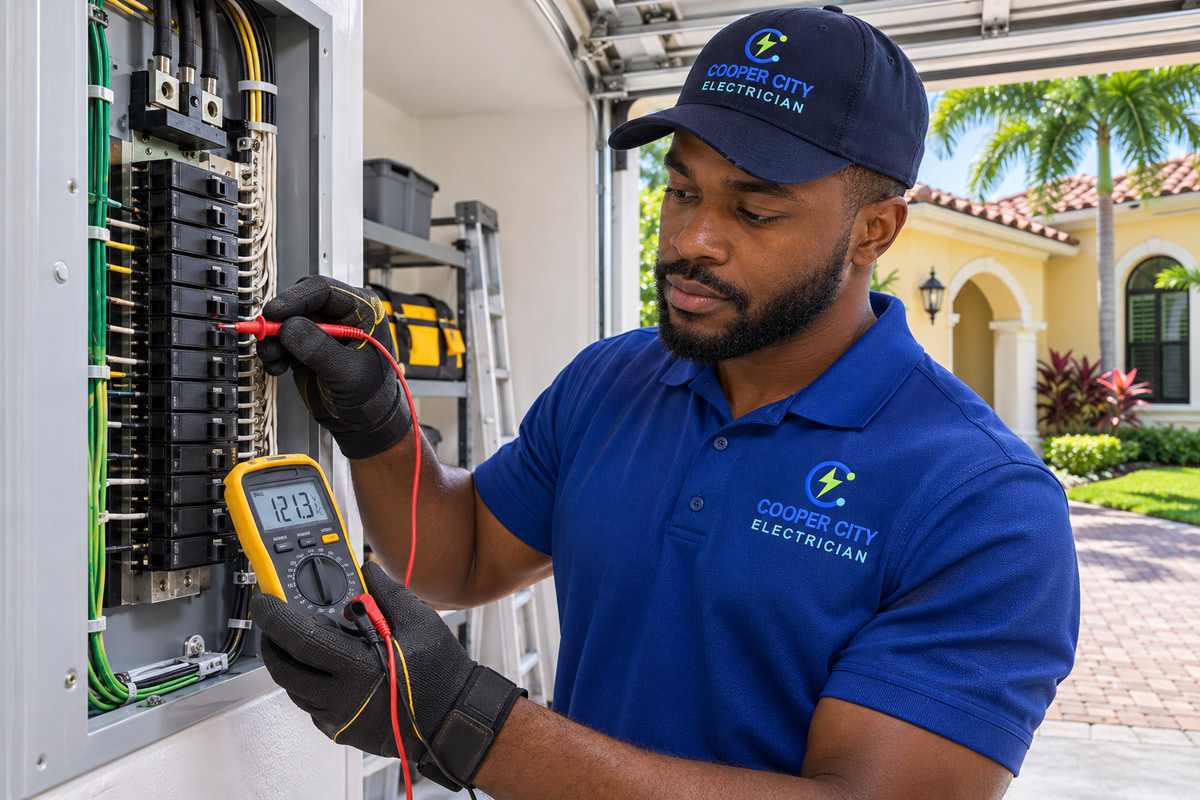
Motor loads are especially sensitive. A well pump, a barn fan, a compressor or an arena light controller needs adequate voltage to start. When voltage is low, motors draw more current, run hotter and wear out sooner. A pump that trips breakers or cycles oddly may be suffering from voltage drop, or from a failing component. Measuring voltage at the load while it runs is the way to tell.
The route also matters. Underground installations have specific requirements for depth, conduit type and protection. The right choices depend on the location, soil, traffic and the type of wire. A route that crosses a driveway, a drainage swale or a paddock where heavy animals walk needs extra thought. Marking the route on a sketch and keeping it with the property records saves trouble for later owners.
Some factors to discuss when planning a long run:
- The total load at the far end, including start up surges of motors.
- The distance and the type of conductor to be used.
- Whether underground or overhead is more suitable for the site.
- Where the shutoff will be located at each end.
- Grounding arrangements at the remote building.
- Room for future growth, such as an extra conduit or a larger feeder.
A worked example makes the point. A barn stands about two hundred feet from the house and is fed by a cable that was sized for two lights and an outlet. After the owner adds a water heater for washing, a pair of large fans and an air compressor, the lights dim when a fan starts and the compressor struggles. Measuring the voltage at the barn panel while the fans run shows a drop well beyond what is healthy. The cure is a new, larger feeder in conduit, a subpanel with its own breakers and grounding, and fans moved to their own circuits. The old cable is not simply abandoned in the ground; it is disconnected at both ends and noted on the sketch. Spare capacity is wise. It is cheaper to install a slightly larger conduit or feeder now than to dig again in five years when you add an arena light or a second well pump.
Barns, arenas and outbuildings that work as hard as the house
A barn is a working building. It has lights, fans, outlets for tools and clippers, a water source, a tack room and sometimes a small apartment or office. All of it has to run safely in an environment that is dusty, damp, warm and full of animals. That combination makes electrical design a serious matter.
Dust is the first concern. Hay, bedding and feed produce fine particles that settle on everything, including wiring devices, light fixtures and motors. Dust that builds up around electrical equipment can ignite from heat or a spark. The remedy is to use enclosed fixtures, sealed boxes and devices rated for the conditions, and to clean regularly. Avoid open lamps, exposed bulbs and cords draped along beams.
Moisture is the second concern. Humidity, washing down stalls and leaks bring water into contact with wiring. Ground fault protection should be used on outlets and circuits where required, and boxes and fittings should be rated for wet locations. A tingle from a metal fixture, a water bucket heater or an animal that seems reluctant to enter an area can be a sign of stray voltage and should be investigated promptly.
Animals are the third. Horses chew wood, rub on posts and kick walls. Rodents gnaw cable. Birds nest in fixtures. Wiring should be protected by conduit where animals can reach, fixtures should be guarded and cables should be routed out of reach. Outlets should be placed high enough, or covered, so that animals cannot disturb them.
Lighting design benefits from thought. Bright, even light helps with daily work and with spotting a sick or injured animal. Lights in stalls should be protected and placed out of reach. Aisles need enough light to avoid accidents. Controls should be at the door, so that someone entering at night can turn lights on without walking into the dark. Emergency lighting, perhaps battery powered, is a good addition in case power fails during a stormy night.
Arenas and paddocks may have lights on poles. These need underground feeders, proper bases and protection against lightning. Poles should be placed with consideration for the safety of riders and animals. Timer controls prevent lights from being left on all night.
If the barn includes living space or an office, additional rules apply. Smoke and carbon monoxide alarms, heating and cooling circuits, and a separate panel can all be needed. A licensed professional and the town permit office should confirm what applies, and we are glad to describe the electrical side in advance.
Gates, wells and the systems you depend on
Large properties often come with infrastructure that a suburban home does not have. A gate at the entry, a well and pump, perhaps an irrigation system for pastures, perhaps a septic lift station, perhaps a generator. Each depends on electricity, and each can fail in ways that disrupt the household.
Gate power is a frequent request. An electric gate needs a source of power at the gate, a controller, sensors and sometimes a keypad or intercom. Because gates are often far from the house, the power cable may be long and the voltage drop meaningful. Low voltage control wires may run alongside, but they should be separated from line voltage and protected from damage. Gate motors are exposed to rain, sun and lightning, so surge protection and weatherproof enclosures matter. Safety sensors must be tested regularly because gates are heavy, and a manual release should be available for power outages.
Well pumps may be submersible, sitting deep in the well, or above ground with a pressure tank. The wiring to a submersible pump is specialized, including a control box in some designs, and failures can be hard to diagnose. If water pressure drops or the pump cycles rapidly, the cause may be electrical or mechanical. A pump on a long run can suffer from voltage drop. A tripping breaker can mean a failing motor, a damaged cable or a leak to ground. A licensed professional who works with wells may be needed for the pump itself, and we can handle the supply circuit and protection.
Irrigation controllers and valves involve low voltage wiring, usually buried. Faults often occur at splices in valve boxes that have filled with water, or where cables were cut by digging. A systematic test along the zone finds the fault.
Backup power is a serious question for rural properties. A standby generator or a portable unit with a proper inlet and transfer arrangement can keep the pump, refrigeration and key lights running after a storm. Placement, fuel storage and exhaust direction all matter. Generators must be outdoors, well away from buildings, and never connected by plugging into a wall outlet. A transfer switch isolates the house from the grid so that power does not flow back onto lines and endanger workers.
Items to consider when planning:
- Which loads must keep running in an outage, and which can wait?
- How long can you be without well water, and what is your plan?
- Who will operate backup equipment, and has it been tested?
- Where will fuel be stored, and how will it be kept fresh?
A short written plan, kept near the panel, helps anyone in the household act correctly in an emergency.
Consider a worked example involving a gate. An owner finds the gate stuck half open after a thunderstorm. The operator has no lights on its board. The first checks are simple: is the breaker feeding the gate on, and does the outlet or junction at the gate have power? If power is present and the board is dead, a surge likely damaged the controller, and the repair is a replacement board plus surge protection at the gate and at the source. If power is absent, the cable between the house and the gate may be damaged, or a ground fault device may have tripped from moisture. Working through those steps in order, instead of replacing parts at random, saves time and money.
Storms, lightning and the open sky
On open land, the sky is large and so are its effects. Storms arrive across open fields with little to break their force. Lightning favors tall objects, and on a flat property, trees, barns, poles and metal roofs are among the tallest things around. For electrical equipment, this raises the risk of both direct and nearby strikes.
A direct strike is rare but severe. More common is a nearby strike that sends a surge through the ground, along wires and into equipment. A long underground run can carry a surge from a barn to the house. Overhead lines are even more exposed. Surge protection at the main panel, at sub panels in outbuildings and at sensitive equipment such as gate controllers and pump controls helps protect investment. Good grounding at each building, and proper bonding between them, reduces differences in potential that can damage equipment.
After a storm, a short walk around the property can reveal problems. Look for downed branches near lines, leaning poles, damaged service masts, water in boxes and wet equipment. If you see a downed line, stay far away, assume it is energized, and call emergency services and the utility. Never try to move it. Keep animals and children away.
Flooding can occur in low areas and along drainage ditches. Water near electrical equipment calls for caution. Do not enter standing water that may contain energized equipment. Turn off power at the main only if you can reach it safely and without standing in water. Equipment that has been submerged must be inspected before it is energized again.
Preparing before the season helps:
- Test ground fault outlets and surge protective devices.
- Check that outdoor boxes are sealed and covers are in place.
- Trim trees near lines by calling the utility or a qualified service.
- Fill generator fuel safely, test the unit and confirm its connection arrangement.
- Secure gates in a way that allows manual operation without power.
- Make sure animals' water supply has a plan if the pump fails.
Power restoration can bring surges. Turn off major equipment before power returns, and bring it back one item at a time. Leave a single light on so you know when power comes back. Check pumps and motors for normal operation after restoration.
These steps cost little compared with the cost of a damaged pump, a fried gate controller or a lost animal.
Planning a project on acreage
Projects on large properties tend to be bigger, and a good start makes a difference. Begin with a list of what you want and in what order. Perhaps it is power to a new barn, lighting for an arena, a gate opener, a standby generator or a rewire of an older house. Think about what matters most, what must be done first for safety and what can wait.
Then walk the property. Mark the locations of buildings, the existing meter and panel, wells, septic systems, drainage, fences and any buried utilities you know about. Digging without locating buried lines is dangerous. The utilities provide a service to mark their lines before excavation, and it should be used. We ask owners to share what they know, and we note any uncertainty.
Our process starts with a phone call. You describe the property and your goals, and we ask questions. For simple tasks, we can talk through what to expect, and a quote follows the call. For complex work, such as feeders, service upgrades, new buildings and rewires, an on site visit is part of the process. We look at the route, the panel, the soil and the structures, and we put the scope in writing.
Permits and inspections are likely to apply. The town permit office can explain what is required, and a licensed professional should confirm code details for your property. We can describe the electrical side so your application is clear. Allow time for the process, since inspections must be scheduled.
On the day of work, plan for animals. Keep them secured away from trenches, equipment and open gates. Let us know about any that may be unpredictable. Trenches are hazards, and they should be marked and covered when not in use. Keep children away from the work area.
After the work, we test, label and document. We leave a sketch of the route of any new feeder, along with the sizes and depths used, because buried work is easily forgotten. We note anything to watch in the future. We also discuss maintenance, such as seasonal checks, testing protective devices and keeping equipment clean.
Owners sometimes ask about phasing. A large project can be broken into stages, each of which leaves the property in a safe and working state. That can help with budgeting and with the schedule of other trades, such as fencing, concrete and landscaping. The key is to plan conduit routes and capacity for the whole project even if you build it in steps.
If you have a property in Southwest Ranches and a project in mind, we would be glad to hear about it. Call, describe what you have and what you want, and we will help you work out a sensible plan.
Properties across Southwest Ranches
Southwest Ranches is a rural residential town with large lots, where equestrian properties and barns are common. Homes are set back from the road, and many properties include paddocks, detached garages, workshops and guest quarters. Because buildings are far apart, electrical service involves long feeders, sub panels and careful attention to grounding and protection. Owners here often ask about barn wiring, gate power, well pumps, lighting for arenas and backup power.
Each property is different, so we begin by learning how yours is arranged and what depends on electricity.
Neighboring towns and districts
Southwest Ranches lies near Cooper City, and we serve both. Old Davie has older homes and horse properties along Davie Road, and Weston and the Indian Trace area are other neighbors. The Cooper City page describes the family suburb nearby. Each page is written for its own setting and may suit your property better than this overview.