
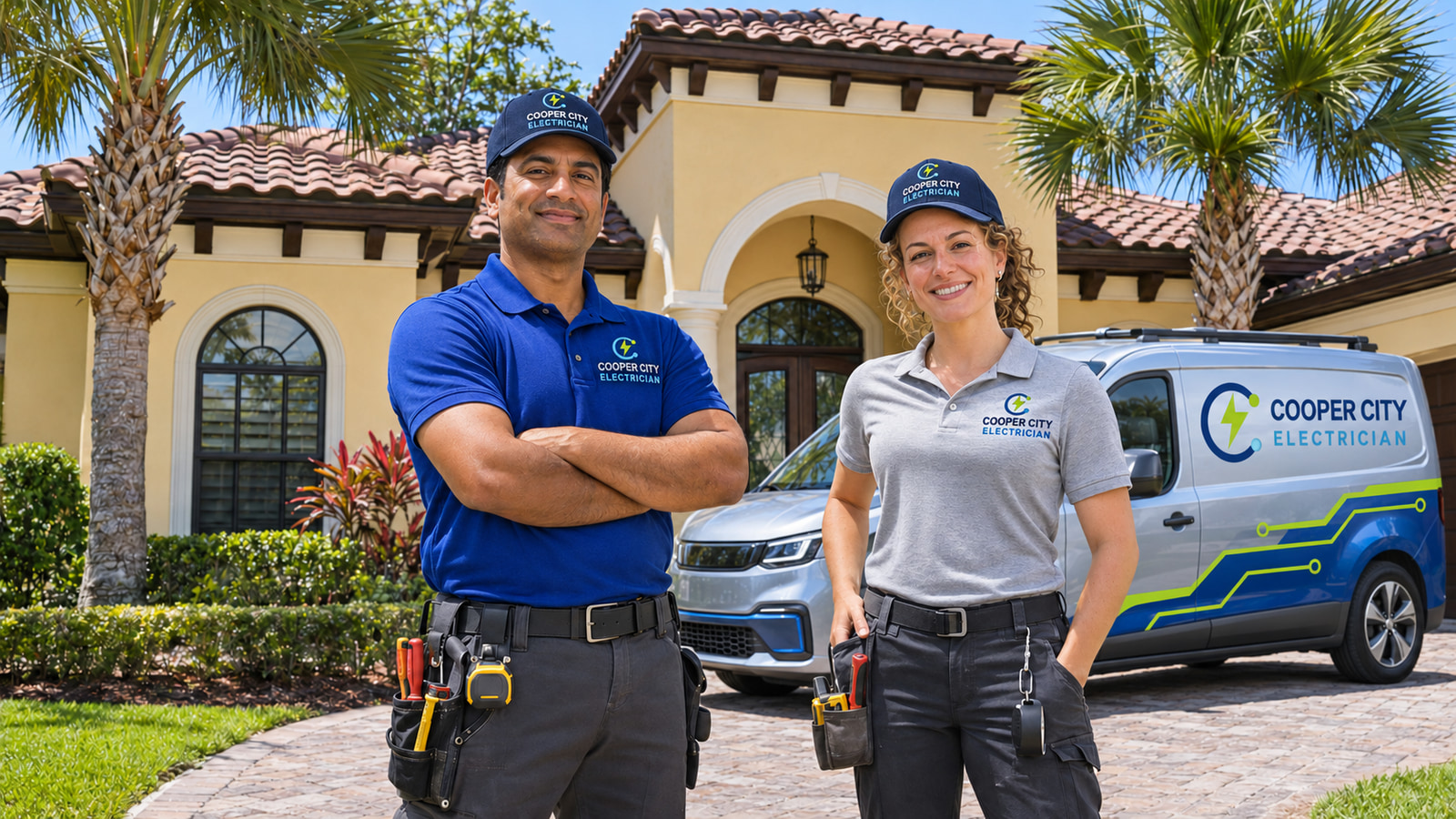
Why the quiet weeks before the season matter most
Everyone who has lived through a South Florida storm season knows how quickly the pace changes once a system forms in the Atlantic or the Gulf. Store shelves empty, contractors fill their calendars, and a job that would take a morning in May becomes a job that waits for weeks. Preparing the electrical system is far easier when nothing is pressing. You can look carefully, ask questions, order parts and schedule work on a day that suits your family, rather than scrambling with a deadline set by a weather map.
Hurricane season runs from June 1 to November 30. South Florida also has frequent summer thunderstorms, so the electrical system faces stress in the warm months even without a named storm. Heavy rain, strong gusts, lightning and long outages are all part of the picture. A house does not need a direct hit to have electrical trouble. A tropical storm passing at a distance can bring wind that bends a service mast, rain that finds its way into an outdoor box or a power surge when the grid is restored.
It helps to think of the electrical system in layers. The outermost layer is the utility connection: the wires to your house and the meter. Next is the equipment you own on the building, such as the mast, the meter base and the main breaker. Then comes the panel and the circuits inside. Finally there is everything plugged in or hardwired, from the refrigerator to the pool pump. Preparation means looking at each layer and asking what might go wrong, what you can do now and what you will do when a storm is on the way.
Single family homes with garages are typical in Cooper City, and that shapes the checklist. The garage often holds the panel, the water heater, the washer and dryer, a freezer and sometimes a workshop. It is also where families put a generator, stored supplies and tools. A garage can flood, can overheat and can become the center of storm preparation. Thinking about it as a room that contains important electrical equipment, not just a place for cars, is a useful shift.
This page is a general guide. It does not replace an inspection of your house, and any work on the service, the panel or the generator connection belongs with a licensed electrician. A quote begins by phone, and anything complicated is confirmed on site. What follows is a way to organize your thinking so the conversation is more useful and your family walks into the season with a plan.
The panel, the main breaker and the service
Begin where the power enters. Look at the outside of the meter and the pipe or conduit above it. In an overhead service, a metal pipe called a mast carries the wires down from the point where the utility connects to your house. Wind can bend or pull a mast, and if the attachment to the wall or the roof has loosened over the years, a storm can finish the job. Look for a mast that leans, for bolts that have rusted, for cracked or missing sealing material where the wires enter the weatherhead, and for tree branches close to the wires. Do not touch or try to straighten any of it. If something looks wrong, note it and call. A damaged mast cannot be reconnected by the utility until it is repaired.
Next, the meter base and any outdoor main enclosure. Rust, cracks, gaps where the cover does not close, signs of water inside and insect nests are all worth noting. Outdoor equipment is exposed to sun and rain for years, and seals dry out. A cover that does not close tightly invites water in the next heavy storm.
Move indoors to the panel. Open the door and look, without touching anything inside the metal box. You are looking for signs of past water, rust, burn marks, a smell of heat or breakers that feel loose. Make sure the panel is clearly labeled. During a storm you may need to turn off specific circuits quickly, and a legible directory saves time and mistakes. If the labels are faded or wrong, a careful labeling session on a quiet day is one of the most useful things a family can do. Check that the area in front of the panel is clear, with room to stand and reach it.
Test the ground fault and arc fault devices that your panel or outlets use, following the instructions on the device. These have test buttons for a reason. A device that does not trip when tested should be replaced. If a breaker trips repeatedly and you do not know why, do not wait for a storm to find out.
Ask yourself questions about capacity too. If you plan to run a generator, does your panel have a safe way to connect it? Will you add large new loads, such as a second air conditioner, before the season peaks? Those are questions for a conversation with an electrician, not for guessing. If the panel is very old, crowded or damaged, the preseason is the sensible time to plan a repair or replacement, because the work involves a utility disconnect and a permit, both of which move slowly once a storm threatens.
Finally, note where the main breaker is, and make sure every adult in the household knows how to use it. In an emergency, the ability to shut off the whole house quickly is a basic safety skill. Show older children where it is and when it should be used.
Outdoor boxes, fixtures, pool equipment and the yard
Outdoor electrical equipment takes the brunt of a storm. Walk around the property and look at it with a critical eye.
- Outlet covers. Weatherproof receptacle covers should close firmly. Cracked or missing covers let water in. In use covers that protect a plugged in cord should be intact.
- Light fixtures. Look for cracked lenses, missing gaskets and fixtures that hang loosely. A fixture that fills with water can trip a protective device or short out.
- Junction boxes and conduit. Check that covers are secured and that conduit is firmly attached to walls. Look for gaps where water can enter.
- Air conditioning disconnects. The disconnect near the outdoor unit is a weather exposed device. Check that its cover closes and that the whip, the flexible conduit, is not cracked.
- Pool and spa equipment. The equipment pad is full of electrical connections. Examine covers, enclosures and bonding connections for corrosion. Do not work on pool equipment yourself. A licensed professional should handle repairs.
- Irrigation controllers and timers. These often have exposed wiring in the garage or on an exterior wall. Secure covers and loose wires.
- Landscape lighting. Transformers, cables and fixtures should be secure. Pull up and store loose items before a storm if they are easy to remove.
- Trees and wires. Branches near the service line can fall in wind. Trimming near power lines is a job for the utility or a qualified tree service, not a ladder and a saw. Never trim near wires yourself.
It is worth taking photographs of the equipment while it is in good condition. If damage occurs, before and after photographs help with insurance and make it easier to explain what changed. Keep the photographs in a place you can reach without power, such as a phone with a charged battery or a printed copy in a folder.
While outdoors, think about how water behaves around your house. Low spots where water collects near a meter, a panel on a garage wall or equipment on the ground are risks. Raising equipment is a major job, but adding drainage, keeping gutters clear and moving stored items away from outlets are small steps that help. Items stored on garage floors, such as extension cords, power strips or battery chargers, should be lifted on shelves so a bit of water does not reach them.
As the season progresses, repeat your walk after any heavy storm. Rain that seems routine can loosen a cover or reveal a weak seal. Catching a problem in July is far better than discovering it in September.
A realistic backup power plan
Few topics generate as much talk before hurricane season as generators, and few are as misunderstood. A backup plan is a decision about how much of your life you want to keep running when the grid is down, and then a decision about how to do it safely.
Start with needs, not equipment. Make a list of what matters most during an outage. Typical priorities include refrigeration, a few lights, phone and device charging, a fan or two, medical equipment, a sump or well pump where relevant, internet gear and, for some families, the air conditioner. Each item draws a different amount of power, and a small portable generator can run some of them but not others. Running central air conditioning, for example, needs a much larger source than running a refrigerator and lights.
Next, decide how the generator will connect. There are three common approaches, and the differences matter for safety.
- Running appliances directly from the generator with heavy duty extension cords. This is simple, but it limits what you can power, and cords must be rated for the load and the outdoors.
- A power inlet box and a transfer switch. A properly installed inlet on the outside wall connects to a transfer switch or interlock at the panel, so the generator can power selected circuits without any chance of sending power back out to the utility lines. This work must be done by an electrician.
- A permanently installed standby generator. It starts automatically and connects through its own transfer switch. It requires planning, a fuel supply, placement away from the building and permits.
Never connect a generator to the house by plugging it into an ordinary outlet with a homemade cord. This practice, sometimes called backfeeding, can send power out onto the lines, endangering utility workers and neighbors, and it can damage the generator and the house wiring. Only a correctly installed transfer device can do this safely.
Location rules matter as well. Generators produce carbon monoxide, a colorless, odorless gas that can kill quickly. A portable generator must run outdoors, well away from windows, doors and vents, and never in a garage, even with the door open. Place it on a dry, level surface, protected from rain by a proper cover or shelter that allows air to move. Keep fuel stored safely and away from living areas, and refill only when the unit is off and cool.
Test your plan before the season peaks. Run the generator under load, check that your cords and inlet fit, make sure you have fresh fuel and oil, and verify that the household knows how to start it. A generator that sits for a year without being run often fails to start when it is needed.
Protecting equipment from surges and storms
Surges are brief spikes in voltage that can damage electronics, appliances and even wiring. They come from lightning, from utility switching and, very often, from the restoration of power after an outage. South Florida's frequent summer thunderstorms make surge protection a practical consideration, not a luxury.
There are layers of protection. A whole house surge protective device installed at or near the panel catches large surges before they spread through the circuits. It protects everything on the system, including hard wired equipment such as air conditioners, which plug in strips cannot reach. Plug in surge strips at the point of use handle smaller surges and the ones that arise inside the house. The combination is stronger than either alone. A cheap strip that has taken a big hit may no longer protect, and many have indicator lights that show whether the protection is still active. Replace strips whose lights go out.
Beyond surge devices, think about what to unplug. Before a storm that threatens to cause an outage, unplug sensitive electronics such as computers, televisions and game systems, or at least turn them off and unplug them from the wall. When the power comes back after a long outage, it may come back unevenly, with brief flickers and surges. Many people wait a few minutes after restoration before plugging things in again, and leave the air conditioner off for a short time so that its compressor does not restart immediately into a fluctuating supply.
Think also about batteries. Charge phones, power banks and rechargeable lights before the storm. If you rely on a medical device, talk with the provider about backup options, and register with local authorities if a program exists in your area for residents who need power for medical reasons.
Do not forget the garage door opener, which is an electrical device that can be an obstacle in an outage. Learn how to release it manually, and know how it behaves when power returns. A surge can damage the opener's control board.
If a lightning strike occurs near your house, signs of trouble may appear later: a device that no longer works, a breaker that trips for no reason, a buzzing at an outlet or a faint burning smell. Treat these seriously and have the system checked.
Family routines, records and a simple checklist
A plan that lives in one person's head is only as good as that person's availability. Make a short, written plan that every adult can follow, and walk teenagers through it. Hurricane season is a good time to teach basic electrical safety to everyone in the home, from how to find the main breaker to why you never touch a downed wire.
Here is a preseason checklist you can adapt.
- Look over the mast, meter and outdoor enclosures for damage, rust or gaps.
- Label the panel clearly and test ground fault and arc fault devices.
- Check weatherproof covers, fixtures and outdoor boxes.
- Inspect the air conditioner disconnect and the pool equipment area from outside, and call for any needed repairs.
- Decide on a backup power approach and, if needed, schedule an inlet and transfer switch installation.
- Test the generator, if you own one, and stock fresh fuel stored safely.
- Consider a whole house surge protective device and replace worn surge strips.
- Charge power banks and keep flashlights and batteries within reach.
- Photograph the equipment and keep records in more than one place.
- Write down the numbers for your utility and your electrician where you can find them without internet.
Think about records. Keep a folder with permits, receipts and notes about electrical work done on the house. After a storm, those documents help with insurance claims and with explaining to a new electrician what has been done before. Add the date and a brief note whenever work is performed.
Finally, think about timing and contacting an electrician. If your inspection turns up something that needs repair, call as early as you can. Describe what you saw and where, and a quote can begin by phone. Complicated work, such as a service repair or a transfer switch, needs an on site visit so the electrician can see the conditions. Trying to schedule work in the days before a storm is hard for everyone, and the quality of work suffers when rushed.
A worked example shows how the pieces fit together. Picture a family of five in a one story house with an attached garage. In late May, the parents spend one Saturday morning on the preseason routine. They walk the outside and find that the cover on the outdoor receptacle by the patio no longer latches, and that the cover on the air conditioner disconnect is cracked. They photograph both and write them on a list. In the garage they discover that the panel directory is faded, so they spend twenty minutes with a flashlight and a marker, flipping one breaker at a time with the teenager calling out which lights and outlets went dark, and writing clear labels. They test the ground fault outlet in the garage and find that it trips and resets as expected. They realize that the old surge strips behind the television have lost their indicator lights and replace them. They sit down with the household and decide that the refrigerator and freezer matter most in an outage, followed by fans, phones and the router, and that central air conditioning will not run on any generator they might own. That conversation leads them to call and ask about an inlet box and transfer switch sized for a modest portable unit. By noon they have a short list for an electrician, a labeled panel and a family that knows the plan. Nothing in that morning required special skill, only attention and a willingness to write things down.
The same attention applies to older family members, to renters and to anyone who shares a home. If a relative uses powered medical equipment, a loss of power is more than an inconvenience, and the plan should include a backup source, spare batteries and a way to reach help. Make sure everyone in the home, including visitors who may stay with you during a storm, knows where flashlights are kept and which outlets are safe to use.
The goal is not to eliminate every risk, which cannot be done, but to enter the season with a house that is sound, a family that knows what to do and a short list of decisions already made. When the first storm comes, you will be glad that the quiet weeks were used well.